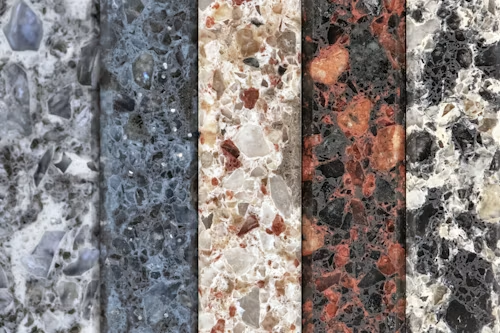

The edge profile of a countertop is one of those details that seems minor until you actually stand in a finished kitchen and notice how much it shapes the overall look. A quartz countertop can be finished with a variety of edge styles, each contributing a different feel to the space, from clean and modern to detailed and traditional. This guide covers the most common edge profiles, how to choose between them, and how they interact with other elements like a granite sink.
Why Edge Profile Matters More Than It Seems
The edge of a countertop is one of the most frequently touched and viewed parts of the entire surface. It affects not just aesthetics but also practical factors like how easily the countertop can be wiped clean and how it feels to lean against while working in the kitchen. Because a quartz countertop is manufactured to precise specifications, edge profiles can be cut with a level of consistency that is harder to achieve with some natural stone materials.
Common Edge Profile Options
Straight or Square Edge
A straight edge is exactly what it sounds like: a clean, 90-degree cut with no additional shaping. This profile suits modern and minimalist kitchens particularly well, and it is often the most budget-friendly option since it requires the least additional fabrication work.
Eased Edge
An eased edge softens the sharp corners of a straight cut with a slight bevel, reducing the risk of chipping at the corners while maintaining a mostly clean, modern look. This is a popular middle-ground choice for homeowners who want a contemporary feel without completely sharp edges.
Bullnose Edge
A bullnose profile rounds the edge into a smooth, curved shape. This style suits more traditional kitchens and is often chosen in households with young children, since it eliminates sharp corners entirely along the countertop’s edge.
Bevel Edge
A beveled edge cuts at an angle rather than a curve, creating a faceted look that adds a bit of visual interest without being overly ornate. It works well in kitchens that want something slightly more detailed than a straight edge without moving into more elaborate profiles.
Ogee Edge
An ogee profile features an S-shaped curve, combining concave and convex sections for a more decorative, classic look. This edge style suits traditional or formal kitchen designs and is generally chosen for its detailed appearance rather than any practical advantage.
Choosing the Right Edge for Your Kitchen Style
A few general guidelines can help narrow down edge profile choices:
- Modern and minimalist kitchens typically suit straight or eased edges best.
- Traditional and classic kitchens often look better with bullnose or ogee profiles.
- Transitional kitchens, blending modern and traditional elements, frequently work well with a bevel edge.
How Edge Profile Interacts With Sink Placement
The edge profile chosen for the main countertop often extends around the sink cutout area as well, particularly near an undermount granite sink where the edge is visible along the cutout. Choosing a profile that works well both along the outer perimeter of the countertop and around the sink cutout ensures a consistent look throughout the kitchen, rather than an inconsistency that draws unwanted attention to the transition between countertop and sink.
Practical Considerations Beyond Aesthetics
Edge profile choice is not purely about looks. A few practical factors are worth considering:
- Rounded profiles like bullnose reduce the risk of chipped corners over time compared to sharp straight edges.
- More detailed profiles like ogee can be slightly harder to keep completely clean in the grooves, requiring a bit more attention during regular wiping.
- Certain profiles may add to fabrication time and cost, which is worth factoring into a renovation budget from the start.
Working With a Fabricator on Edge Selection
Because edge profiles are cut during fabrication rather than adjusted after installation, it is important to finalize this choice before the countertop is cut. Comptoir Quartz typically provides physical edge samples for clients to see and feel in person, since photographs alone often do not convey how a particular profile will look and feel once installed.
How Edge Profile Affects Everyday Use
Beyond appearance, the edge profile chosen can subtly affect daily kitchen habits. A bullnose edge, for example, is naturally more forgiving when someone brushes against the countertop while moving through the kitchen, which can matter in a busy household with a lot of foot traffic near the counter. A straight or eased edge, while sharper in comparison, tends to be easier to wipe clean in a single motion, since there is no curve or groove for crumbs or liquid to collect in. Thinking through how the kitchen is actually used day to day, not just how it will look in photographs, can help clarify which profile makes the most practical sense.
Combining Different Profiles Within One Kitchen
While consistency is generally recommended, some kitchens intentionally use two different edge profiles to distinguish between zones. For example, a simple straight edge along the main perimeter countertop paired with a more detailed profile on an island can help visually separate the two areas while still feeling like part of the same overall design. This approach works best when the two profiles share a similar level of formality, avoiding too jarring a contrast between a very plain edge and a highly ornate one within the same room.
Final Thoughts
Edge profile might seem like a small detail buried under bigger decisions like color and material, but it has a real impact on how a finished kitchen looks and functions day to day. Taking the time to consider how a chosen profile fits the overall kitchen style, and how it will look around a granite sink cutout, ensures that a quartz countertop looks intentional and well-finished from every angle, not just from a distance.