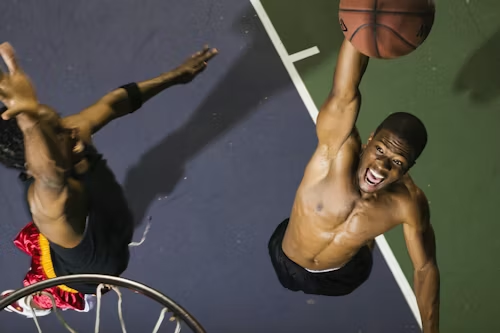

For many basketball players, dunking a basketball is a dream. Watching a player soar through the air and slam the ball through the hoop looks effortless at the professional level, but for amateur players, it can be confusing and frustrating. The main reason? Most players have no clear understanding of the numbers behind dunking. How high do you actually need to jump? Is your height enough, or do you need to train your vertical leap?
This article breaks down the key concepts that determine dunking ability, explains how much vertical jump is required, and shows how tools like a dunk calculator can help you realistically measure your potential.
Why Dunking Feels So Hard
Dunking is more than just jumping high. Many players assume that taller players can automatically dunk, while shorter players think it’s impossible for them. In reality, dunking is influenced by a combination of factors:
- Height – Longer legs can help generate more jump power.
- Standing reach – The height you can reach without jumping.
- Vertical jump – How high you can push off the ground.
- Technique – Timing, approach speed, and grip.
Understanding these factors is the first step toward figuring out how high you need to jump.
The Key Measurements That Determine Dunking Ability
1. Height
Height plays a role, but not as much as many players think. Taller players have an advantage because they usually have a higher standing reach, meaning they don’t need to jump as far. However, height alone does not guarantee you can dunk.
Example:
A 6’0” player may have a standing reach of 7’9”, while a 5’10” player with long arms might reach 7’8”. The difference in actual vertical jump required could be very small.
2. Standing Reach
Standing reach is the height you can touch when standing flat footed with your arm fully extended. This measurement is critical because it defines your starting point before you jump.
Factors affecting standing reach:
- Arm length
- Shoulder width
- Overall body proportions
Example:
Two players of the same height can have different standing reaches. A player with longer arms can dunk more easily even if they are shorter than their opponent.
3. Vertical Jump
Vertical jump is the height you can propel yourself off the ground. This is often the focus for players trying to dunk. There are two main types:
- Standing vertical jump – Jumping from a stationary position.
- Running vertical jump – Jumping after a short approach, usually higher and closer to real dunking conditions.
Most dunking attempts rely on running vertical, as momentum helps increase jump height.
4. Rim Height and Required Clearance
The standard basketball rim is 10 feet (120 inches) high. To dunk effectively, your hand usually needs to reach 6–8 inches above the rim. This extra space ensures:
- Proper ball control
- Smooth dunking motion
- Avoiding rim interference
This requirement means simply touching the rim is not enough to dunk.
Calculating How High You Need to Jump
You can roughly calculate your required vertical jump using your standing reach and the height needed above the rim.
Step by step example:
- Measure your standing reach – Suppose it is 8’0” (96 inches).
- Determine target hand height – To dunk, aim for 10’6” (126 inches).
- Calculate required vertical jump – 126 – 96 = 30 inches.
This means a player with an 8’0” standing reach needs a 30-inch vertical jump to dunk effectively.
Real World Examples for Amateur Players
Example 1: Recreational Gym Player
- Height: 5’9”
- Standing reach: 7’4” (88 inches)
- Target for dunk: 10’6” (126 inches)
Required vertical jump: 126 – 88 = 38 inches
This player would need to improve their vertical jump significantly to dunk, highlighting the importance of strength and explosive leg training.
Example 2: High School Player
- Height: 6’1”
- Standing reach: 8’0” (96 inches)
- Target for dunk: 10’6” (126 inches)
Required vertical jump: 126 – 96 = 30 inches
This player is within reach of dunking with proper training and technique.
Example 3: Short but Explosive Player
- Height: 5’7”
- Standing reach: 7’2” (86 inches)
- Target for dunk: 10’6” (126 inches)
Required vertical jump: 126 – 86 = 40 inches
Despite being shorter, this player could dunk with excellent leg strength and jumping ability.
How a Dunk Calculator Helps
Instead of guessing, players can use a dunk calculator to determine their dunking potential. By entering height, standing reach, and vertical jump, the calculator estimates:
- Whether dunking is realistic
- How much vertical jump improvement is needed
- Tips for training based on current measurements
This tool removes uncertainty and helps players focus on measurable goals.
Tips to Improve Your Vertical Jump
If your calculations show that you are close to dunking, you can focus on improving your jump height:
- Strength training – Squats, lunges, and calf raises improve explosive power.
- Plyometrics – Box jumps and jump squats train your fast twitch muscles.
- Technique drills – Practice approach, takeoff, and arm motion for maximum efficiency.
- Flexibility and mobility – Stretching and ankle mobility help jump higher and land safely.
Even a few inches of improvement can make the difference between rim touching and actual dunking.
Conclusion: Realistically Assess Your Dunk Potential
Dunking a basketball is a mix of height, standing reach, vertical jump, and technique. Many players struggle because they guess their capabilities rather than measuring them. By understanding your standing reach, calculating the required vertical jump, and using tools like a dunk calculator, you can set realistic goals and track progress.
Whether you are just a few inches from your first dunk or building athletic ability from scratch, knowing the numbers behind dunking helps you train smarter and stay motivated. With proper measurement, practice, and patience, the dream of slamming the ball through the hoop is entirely achievable.